Research keeps piling up about the importance of sleep, especially deep sleep, not only for our mood, energy and recovery, but also to reduce inflammation and support brain health. You may have seen the recent research that fluid channels open up in the brain during deep sleep, for a kind of internal “car wash”!
When we’re traveling, it can be especially challenging to defend our sleep (and our good nutrition and physical movement), but I’m up for it! Also I know from unfortunate experience that after about three days with lousy sleep and no significant exercise, I can crash into irritation, trouble making decisions, or a full-on attack of self-doubt and crying. :/
For the past few years, I’ve been tracking my sleep with the AutoSleep app for my Apple Watch — yes I wear a heavy Bluetooth-enabled object on my wrist all night, the sleep info is worth it to me! ? This has given me fascinating insights into my sleep cycles and how my daily habits affect them. For instance I get the most deep sleep, on average, during my alcohol-free periods; the level is acceptable but not great with one small drink a day; and if I have more than one, my deep sleep score often falls into the orange or red warning zones. Darn it!!
Besides minimizing alcohol, here are my six favorite strategies to protect my sleep while traveling, whether for a conference, visit with relatives, family trip or just a weekend away. I hope you find them useful (let me know!).
Darker than just eyelids ?
“I have eyelids,” says my mother when I suggest curtains to block out the streetlights shining through her white plastic blinds. But closing our eyes doesn’t seem to be enough to promote truly deep and healthful sleep.
A recent large-scale study even showed that people exposed to more nighttime light were more likely to have diabetes, obesity or hypertension, yikes!
I feel my best, and get good sleep scores, when I rest in true darkness — not even being able to see my hand in front of my face — and the closer I can get to it, the better. Most hotels have blackout curtains, but a surprising number of Airbnbs have sheer curtains or no window coverings at all, so I check carefully when I make a booking.
I always travel with my soft Velcro-closure sleep mask, and when driving I sometimes even take along blackout curtain panels, for instance to hang over my mom’s flimsy blinds. I also pack black tape to temporarily cover the bright little lights on hotel phones, TVs, etc.
Of course it’s important to be able to see if we need to get up at night, and I understand about wanting light to naturally help us wake up in the morning (although now I love getting up in the dark and waiting for dawn with my coffee). Besides my phone flashlight for nighttime getups, I like red reading lights or red nightlights, which don’t affect us as much as white or blue light. And leaving a little opening in the blackout curtains can bring in plenty of light in the morning while still protecting the darkness. Here’s another blog post I wrote about setting up our bedrooms for deep, restorative sleep:
Standing up for my schedule
Our circadian rhythm is a complex dance of hormones and energy levels, and we do best when it is consistent from day to day, and also consistent with the patterns we naturally fall into, such as night owl or early riser. I’ve become more of a “lark” as I’ve aged, and I know that even if I stay up late for a worthwhile event or great conversation, I’ll still wake up early, reducing my overall sleep.
So I need to protect my early bedtime, which in my case is being in bed at 9 pm. I can afford an exception now and then, but not night after night.
I’ve found it best to give cheerful advance notice to the people I’m traveling with (or staying with), that I need to finish eating by 8 pm for sure and be in bed at 9 if possible. It’s just how I function best, and they’ll thank me later when I’m more cheerful and energetic the next day. As much as I’d like to continue the evening conversation or join in on the late outings, I just can’t, but I don’t want it to affect their enjoyment and their own schedules. If someone is annoyed, I regret that, and I truly don’t want to cause extra trouble, but it’s on them. We all need to accommodate each other in a wide range of ways: allergies, disabilities, phobias, and much more, and this is just one of those.
At the other end, I tend to get up at 5 am (and really enjoy the quiet time before and during sunrise), and I stay quiet and go outside or to the lobby. In case no coffee is available that early (or I don’t want to make noise banging around in the kitchen), I bring along Starbucks instant coffee packets to microwave in a cup of water, or even to warm up outdoors on my tiny camping burner.
When I protect my schedule and get a 97 or 100 sleep score, I’m more resilient and capable and can show up for others as more of my true self. I’m also protecting and not undermining my long-term health, which is good for my family as well as for me!
Food/drink timing
Our meals and snacks also help set and maintain our circadian rhythm. Thus food/drink timing is a powerful tool when we’re crossing time zones. The principle is to eat on the new time to adjust more quickly and easily.
For instance, let’s say I’m flying overnight to Europe from the US East Coast (which I’ll be doing on August 2 this year!). At noon at home, it’s already 6 pm in Germany. So I eat a hearty, nutritious “dinner,” followed by a few more snacks like nuts, fruit and yogurt which I would typically have in the evening. When I Uber to the airport at 3 pm, it’s already 9 pm at my destination, and I definitely wouldn’t be eating then. I tell myself that it’s evening and time to relax and rest. On the flight, I cozy up in my window seat with my eye mask, blankets, pillows, a foot hammock and a nice long audiobook, cover my head and let my seatmates know I won’t need a meal, drinks or other service until coffee and breakfast in the morning.
My Apple Watch typically tells me that I get about 4 hours of sleep on the plane during an 8-hour flight, not bad! And when the lights come on in the plane even though it’s 2 am in Washington, I go ahead and have coffee and breakfast. Stumbling around in the daylight for the rest of the day further cements my adjustment.
An interesting question: couldn’t I adjust my food/drink timing while traveling so that I can stay up late and sleep late along with my hosts or traveling companions? This hasn’t worked for me, because I seem to be strongly tied to the light/darkness pattern. I could probably do it if I were traveling to Alaska or another place with super-long days or nights. Sounds like a good future experiment?
Meanwhile, on my travels I try my best to stick to the food/drink schedule that works best for me (and of course this is different for everyone):
- Consuming calories only during 12 hours of the day, between 8 am and 8 pm in my case.
- Having my largest meal at midday or mid-afternoon.
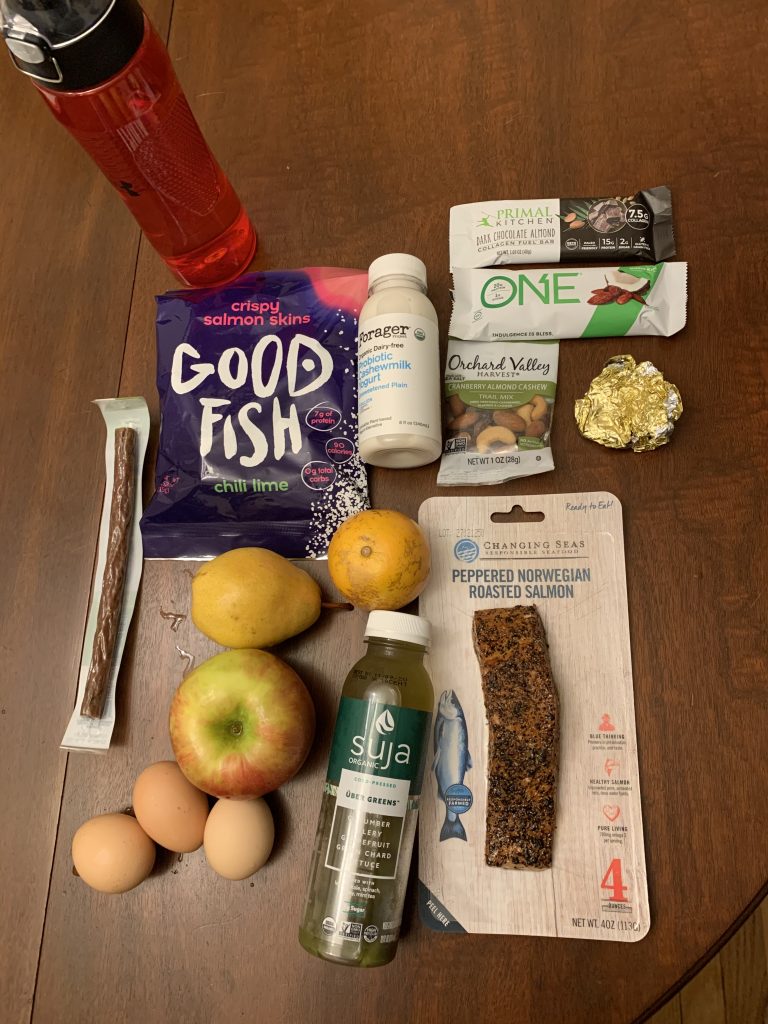
If others will be doing something different, I quietly take care of myself by finding or packing food I can consume when I need to, like pea protein powder and my shaker cup, green juices, yogurt, boxed or bagged salads, tuna packets, natural protein bars like Taos Bakes, fruit, nuts, etc.
Separating myself
Spouses are generally expected to sleep in the same room, and of course our accommodations tend to be small when we’re traveling. But sharing a room with my spouse or anyone else can be problematic for numerous reasons: different sleep schedules, snoring, rolling over vigorously (that’s me).
Instead, I get creative about finding ways to separate myself for good sleep. We seek out Airbnbs with at least a pull-out couch, or extended stay suite-type hotels which are often the same price as single-room places. And I actually love camping and sleeping in small cozy places and on firm surfaces. I’ve happily snuggled up in a walk-in closet and on my mom’s balcony.
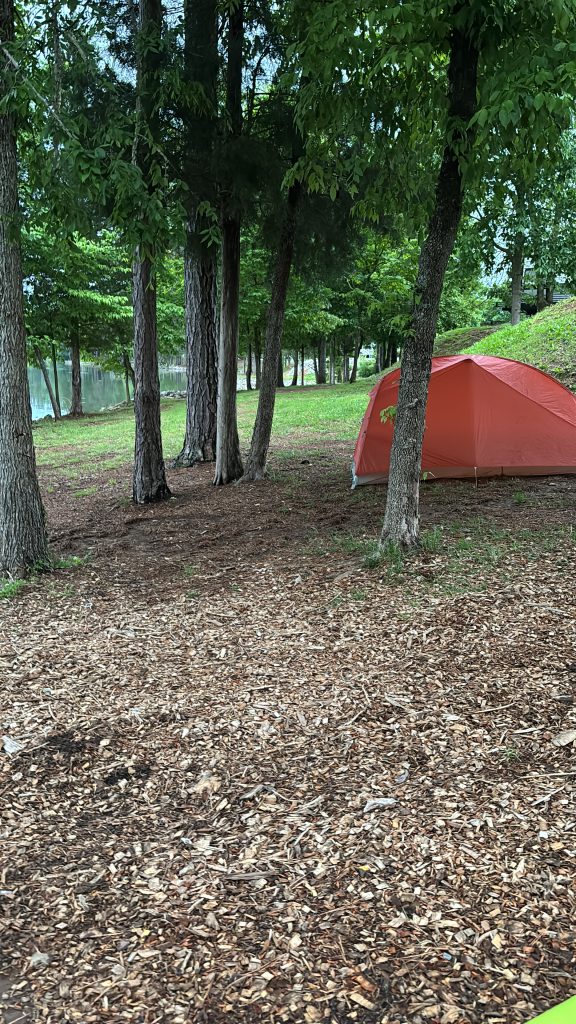
I travel with an inflatable sleeping pad or yoga mat just in case, and I recently acquired an ultralight pop-up single tent (on sale at REI) which I can pitch just about anywhere, including in the backyard of a shared house during a family reunion. It’s cozy and comfortable even if it rains! I love it so much that I’ve started camping by myself (at well-run campgrounds) on solo road trips.
Moving my body
Some trips are great for physical movement, when I’m exploring a new city on foot or riding an e-bike for hours on a trail (yay!). But sometimes it’s all about sitting around, talking and eating. This can not only crash my mood and energy, but also affect my sleep in a vicious cycle. Without physical movement I sleep poorly, and then I don’t feel energetic enough to get moving the next day, especially if it isn’t built into the daily plan and I have to take the initiative to make it happen myself.
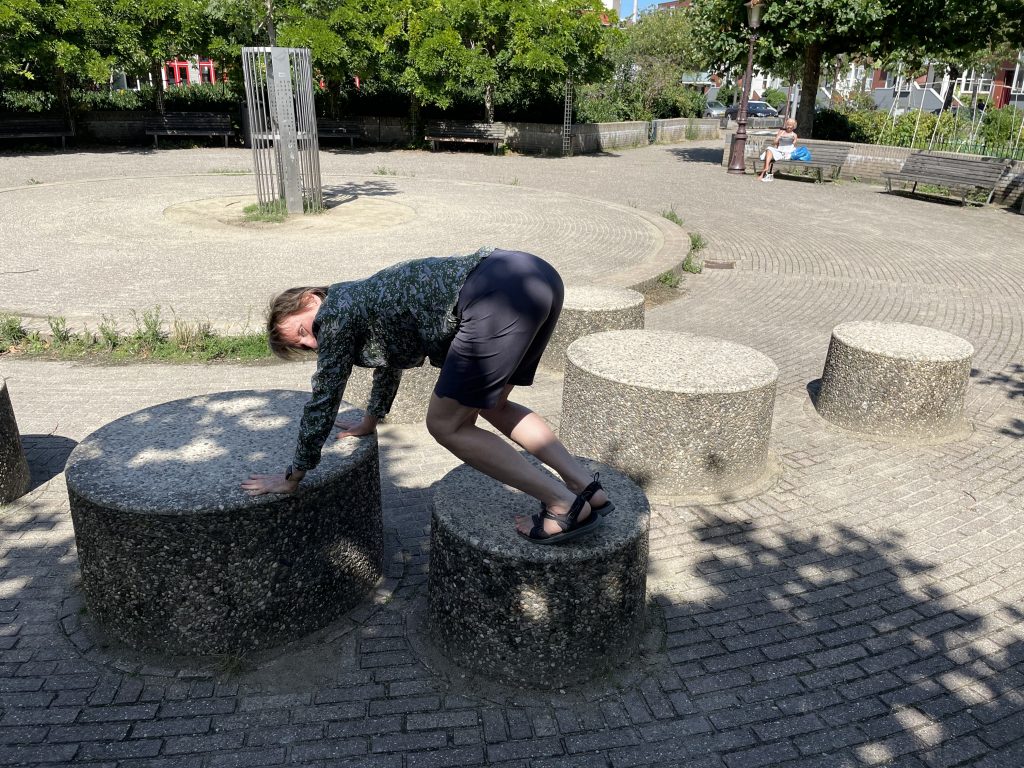
So I know that I need to cheerfully excuse myself from the conversation and/or take time before others get up in the morning to move my body. It’s also great to work out the aches and kinks from traveling. I used to run a mile or two, but my left knee no longer thinks that’s a good idea, so I might just walk steadily for 2-3 miles. If my host or hotel has a gym, I’ll put on a great playlist with my earbuds and use the weights or machines. I also love to dance to Zumba songs, even by myself (I remember the steps from class, more or less). Of course it’s embarrassing if anyone is looking, but I’ve done this on balconies, in driveways and inside hotel rooms and Airbnbs. I also like to listen to Tabata songs (music with guided 20-second intervals) and do functional exercises like squats, standing lunges, crawling and modified push-ups. The main thing is to keep it simple and remind myself of the benefits so I’ll actually get over that social hurdle of slipping away and actually doing it.
Even just 15-20 minutes of weights, dancing or functional exercises can significantly improve my mood, raise my stamina for relatives’ anecdotes I’ve heard many times before 🙂 and noticeably improve my sleep.
Soothing myself with audio meditations and audiobooks
Settling my mind at bedtime and during nighttime wakeups is challenging anywhere, but it can be worse during travel due to jet lag or whatever work or personal challenges may be arising.
My favorite method to let go of the day, calm racing thoughts and ease into sleep (or back to sleep) actually involves my iPhone. It’s so true that we should avoid devices and screens before bed or during the night, but this method really works for me and many others I’ve talked to.
- I download audio meditations (from Insight Timer in my case) and audiobooks (Audible).
- For the meditations, I’m looking especially for mind-body content designed for the transition to sleep, like deep breathing, body scans or soothing affirmations.
- For audiobooks, I choose non-fiction topics that are interesting but not overly exciting, and which will still make sense if I start up again after missing some of the content. Some of my favorite recent titles: Eager: The Surprising, Secret Life of Beavers and Why They Matter, Kombucha Curious, and At Home by Bill Bryson (a history of household objects and practices)
- I set the audiobook player at 0.7 speed, for a nice soothing voice cadence, and set the automatic timer for 30 minutes (there are many other choices of course).
- With everything lined up in advance, I shut down the rest of my phone: activating airplane mode, turning off WiFi, putting it in Sleep Focus and of course Night Shift for brightness and colors, and even using the Screen Time function to turn off apps that might distract me.
- If I need to be alert to an important call, I can create exceptions and still turn off most sounds and functions.
- The biggest downside here is having earbuds in my ears: I use wired earbuds and dig out a gentle hole in my pillow to avoid pressure. My husband prefers to just set his phone on the nightstand (in another room) to narrate the audiobook out loud.
Here’s my 4-minute YouTube video, filmed in my bed 🙂 about how I get back to sleep with slow audio. And here’s a previous blog post I wrote about dealing with racing thoughts when we’re trying to sleep:
So those are my six favorite strategies, which I’ll be using once again as I travel this summer. I hope you find them useful for your own journeys, or at home! I’d love to hear about your own strategies too; please leave a comment here or email me at patricia@fierceafter45.com!
And if you’d like to work on your own sleep habits, having a coach can bring faster and more effective results, and my coaching costs much less than a new mattress ?. Let’s connect on Zoom for a no-pressure, no-obligation call about your current habits (related to sleep or anything else), your goals, and whether I might be the right fit to help you get there! Thanks so much for reading, and I hope to connect with you soon!