So many of us notice that we are getting up at night more often to use the bathroom. Maybe twice, three times or even more.
We might think this is just normal aging and not do anything about it. But getting up twice or more at night is known as nocturia and deserves our attention. It has many possible causes, but the good news is that many if not most of them are treatable, either medically or with our own self-care and habits, or both.
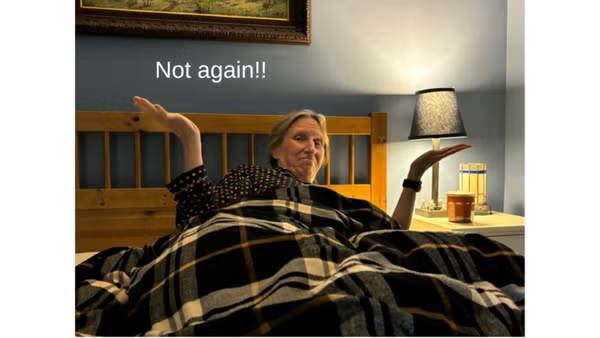
In my case, I used to get up 2-3 times per night, but now I am down to 0-1. So much better!
I’ve found that we need to become bladder detectives to figure out what is going on and how to turn it around. And so I’m here to share what I’ve learned with you, I hope it is helpful!
As bladder detectives, we need to look at:
- medical conditions we may have (perhaps without knowing it)
- what our urination patterns actually are
- our pelvic health and strength
- our sleep quality
- and our habits, including what we are drinking and when.
And of course determined bladder detectives speak up to our doctors. So many women do not, so they suffer in silence and don’t get treatment that could help.
Let’s dive in! Note that I am addressing women here — for men, your detective work definitely includes the prostate and a checkup with your urologist.
What Bladder Detectives Do
Talk to our doctors about the conditions mentioned here
Fill out a three-day Bladder Diary
Try this Nocturia Symptom Tracker
Test out changes in our habits (see below)
Overactive Bladder (OAB)
I’ve learned that this is actually more of a symptom (like a headache) rather than an actual disease. It just means that our bladder contracts more frequently and urgently than normal (in the daytime, nighttime or both). So it’s only a starting point for our detective work, not an endpoint.
Here’s a great web page about OAB. It can have many different causes, and it DOES have treatments. Habit change and pelvic floor exercises are the first things to try! But there are also medications and surgical interventions. Some 30% of women are considered to have OAB, so you are definitely not alone!
Genitourinary syndrome of menopause (GSM)
Up to 84% of postmenopausal women experience thinning and drying of the vaginal tissues due to lower estrogen levels, which can lead to pain and irritation. Oh yeah, I know about that! It makes urinary tract infections (UTIs) more likely, and even without a UTI, we can experience a feeling of tissue irritation that makes us want to pee more often.
A highly effective treatment for GSM is prescription low-dose vaginal estrogen (different from systemic hormone therapy, which is another important conversation in menopause). Advocates point to research showing that low-dose vaginal estrogen has an excellent safety profile for women of all ages and can improve our quality of life (and reduce UTIs), BUT many primary care doctors and even GYNs don’t mention it. It is applied as a cream (this is what I use) or an inserted ring.
Other ways to soothe irritated tissues in GSM include vaginal moisturizers with hyaluronic acid, which have also been shown to be highly effective, and neutral, non-irritating lubricants. Irritation reactions are very variable, so we all need to experiment to find what works best.
Pelvic floor dysfunction (tightness, spasticity, weakness)
The pelvic floor is a set of muscles and connective tissue that stretches across the pelvis from front to back and side to side. It is actually the base of our core, and it’s important for our core strength, stability and even our balance as well as our urinary and sexual functions.
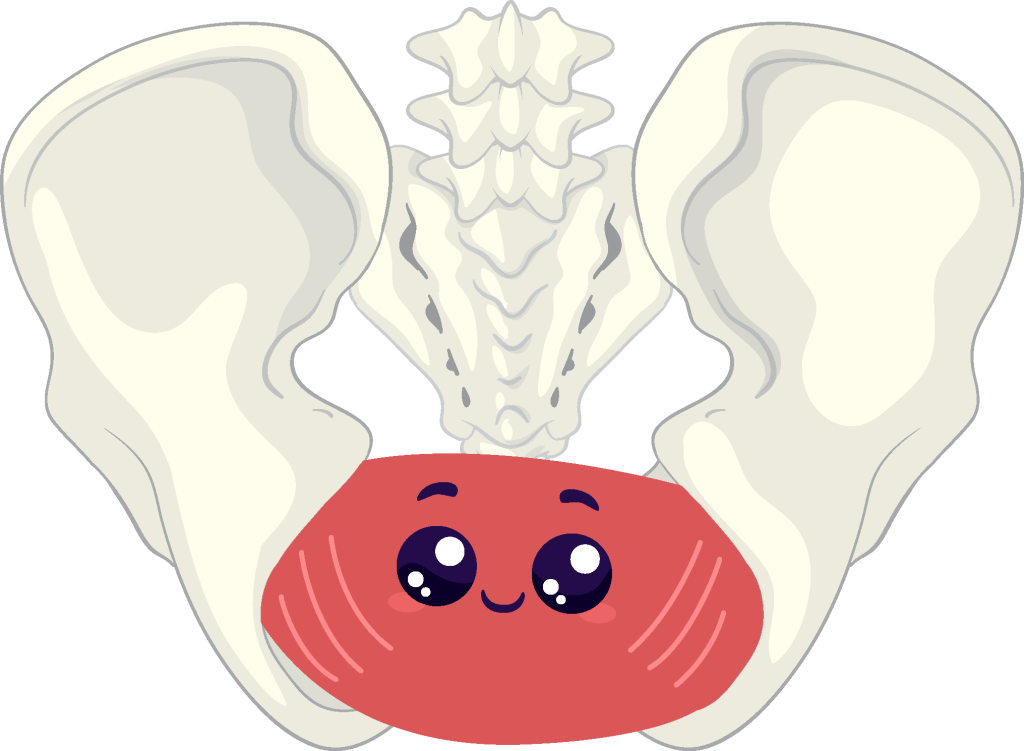
But like any other group of muscles, the pelvic floor muscles can become weak, chronically tight, or spastic (tensing up suddenly, like a cramp). It’s not so different from having tight shoulders, or weak arms.
All of these issues can make us more likely to get up at night to pee. Weakness means we can’t hold as well when our bladder starts to get full. Tightness can prevent us from fully emptying the bladder, so we have to go again sooner. And sudden tensing can give us that feeling of urgency.
The good news is that the pelvic floor muscles can be trained, stretched and released, like any other set of muscles. We just tend to neglect them because they are in a hidden, private location in the body — but they need and deserve our care!
For tightness and spasticity, there are excellent pelvic floor physical therapists who can help with stretches, massage, breathing exercises and more. Your GYN might also recommend some self-care measures like vaginal dilators.
For pelvic floor weakness — which almost all of us have as we get older — the classic recommendation is Kegel exercises (here’s a video of me explaining how to do them optimally). We can also “turbocharge” our Kegel exercises by adding movements.
The pelvic floor has partner muscles in the body, especially the diaphragm (breathing muscle), the glutes and the inner thighs. So by breathing forcefully and contracting the glutes and/or inner thighs as we do our Kegels, we can get a lot more strengthening power in a shorter time.
This is the principle behind the Pfilates method, which I’m certified in. I’m on a mission to teach every woman these simple exercises (including younger women because they are important before and after childbearing).
How can you learn the Pfilates exercises?

- Free: Watch this 12-minute video from the Pfilates team teaching the basic exercise.
- Truly optional donation-based: Sign up here for an upcoming Zoom workshop with me.
- Just $50: Hire me for a private 1-hour Zoom session at your convenience, to teach you the exercises and choose the best variation for your body and your daily routine.
- Just $149: Sign up here for a self-guided video course from the Pfilates team.
Note: If you have significant tightness (hypertonic pelvic floor), it’s important to address it before doing strengthening exercises, because they could make the tightness worse.
Urinary tract infection (UTI)
You might think it is obvious whether you have a UTI or not. However, it’s not uncommon, especially after menopause, to have a low-level or chronic infection. This can cause irritation and increased urinary frequency, among other problems of course. Definitely something to check into with your doctor, and there are new treatments available in addition to antibiotics.
Sleep problems
Maybe you’re getting up at night because your sleep isn’t that great? Do you get back to sleep comfortably and easily after using the bathroom at night? This is a good sign for your sleep quality. If not, this may be an issue for you.
Obstructive sleep apnea is common and often untreated, and it is a double whammy for nocturia. It messes with our sleep AND it even interferes with the body’s natural process of making less urine at night. Of course it is also lousy for our health in many other ways. Get a sleep study if you have any suspicion that you might have sleep apnea!
In our modern world, we mess with our sleep in so many other ways too, and it’s worth changing our habits to improve sleep. You likely know what they are, but if you’d like some ideas from me, check out my blog posts and videos here:
- What to do when we can’t sleep because of racing thoughts
- Getting better sleep while traveling
- Turning our bedroom into a restorative sleep sanctuary
- 10-minute video on sleeping better while traveling
- 4-minute video on my best strategy for getting back to sleep.
Pelvic organ prolapse
This is when the pelvic organs (bladder, uterus and/or bowel) are less supported over time and they sag or bulge downward. It’s no surprise that this can put extra pressure on the bladder and lead us to urinate more often.
Prolapse can affect our quality of life, but many women don’t recognize it until it becomes quite advanced. I’ve had participants in my Zoom workshops who learned about prolapse for the first time from me and suddenly realized they have it.
Ask your GYN about prolapse, and note that sometimes it’s more evident when you’re standing and not when you’re lying down for a pelvic exam. You might get a pessary to wear internally to help support your organs. Surgery is also an option for advanced cases. And our Pfilates exercises don’t repair prolapse but they can definitely help prevent it from getting worse. See above for how to learn the exercises!
Polyuria
The human body naturally makes less urine when we’re sleeping, but sometimes this system can get messed up. If we produce more than 1 liter of urine at night, it’s called polyuria, and of course it will cause us to get up to pee.
It can have various causes, including sleep apnea. Checking your urine volume at night a few times can give you a clue, and definitely talk to your doctor if you think you might have polyuria, because there are treatments!
Sometimes it’s just what we are drinking / eating!
All of the medical conditions mentioned above can contribute to nocturia. But sometimes we can get relief (perhaps decreasing from 2-3 times down to 0-1) by doing some bladder detective work and changing our drinking/eating habits.
Certain kinds of beverages and foods can irritate the bladder: here’s what the Mayo Clinic says about it. You can experiment with cutting these out, reducing them, or having them earlier in the day, and see if it helps!
- Caffeine
- Acidic or spicy foods and drinks
- Carbonated drinks (for me, cutting out fizzy water in the evening made a big difference)
- Alcohol (this has a double effect since it can also interfere with our sleep cycles)
- Salty foods (we often think about water intake, but don’t forget sodium as well!)
Some women are understandably so desperate to fix their nocturia that they drastically restrict their water intake. The Mayo Clinic mentions that this can lead to dehydration, and it can also backfire because we can become constipated and that puts pressure on the bladder.
Monitoring our urine color is a simple way to check on our hydration status. Normal urine is a pale straw-like color. If it becomes darker, going in the direction of apple juice, that signals dehydration.
Drinking plenty of water during the day (the Mayo Clinic mentions 60 ounces, but there isn’t a strict guideline that applies to everyone) and urinating fully before bed is good for our health in general.
And sometimes getting up at night is a habit that we can change
Is your urine volume low when you get up at night? Have you investigated and treated the possible issues mentioned above? Sometimes using the bathroom can be a habit that we get into when we have the normal brief wakeups at night.
Bladder retraining is a method used for excessive daytime frequency as well as nocturia. The basic idea is to learn to stay calm when you get the urge to pee and train yourself to wait longer. For some women, bracing or gently pulsing the pelvic floor to activate the muscles can also help.
Healthy habits to try
These habits can help us feel better and get healthier overall as well as possibly helping with nocturia. If you could use some support and accountability in changing your habits, please consider a short, affordable coaching package with me! Reach out or make your own appointment for a free Zoom consultation here!

- Reduce alcohol to 0-1 units per day, and avoid it near bedtime.
- Reduce or avoid snacking on salty and sugary foods in the evening.
- Get out in the sunlight during the day (even if it’s cloudy) and get some physical movement to improve sleep.
- Reduce sodium to around 2000 mg a day (4000 is typical on the standard American diet).
- Protect your sleep and make your bedroom a sanctuary.
- Practice meditation, journaling or whatever helps you reduce stress.
- Make your path to the bathroom safer to avoid falls.
- Do regular Kegels and Pfilates exercises, and strengthen your mind-body relationship with your pelvic floor, I can help!
Please share this post with other women if you found it helpful, thank you very much! It’s time to speak up about this area of our health and empower ourselves to feel better and improve our quality of life.
Warm greetings to my fellow Bladder Detectives, and thanks for reading!